

Attractions
© Patrick.rebTemple of Horus
4.8·$9·2h
35 destinations
Nile Valley
A laid-back Nile town between Luxor and Aswan, built around the astonishingly intact Ptolemaic temple of the falcon-god Horus.
Edfu through the eyes of travelers who've been there.
Sign in to share your own photos of Edfu.
Sign inExplore by category
Curated by the egyptway editorial teamUpdated June 2026
Most cruise passengers meet Edfu half-asleep, jolted awake at the mooring by the clatter of hooves on the corniche. It is a working Nile town of sugar refineries and dusty squares, and at first it seems like a place you simply pass through on the way south to Aswan. But Edfu guards one of the great survivals of the ancient world, and the town has arranged itself around that gift with an easy, unhurried confidence. There is no rush here, no scrum of touts on the scale of Luxor — just the carriages waiting, the souk stirring, and a temple that has outlasted everything around it.
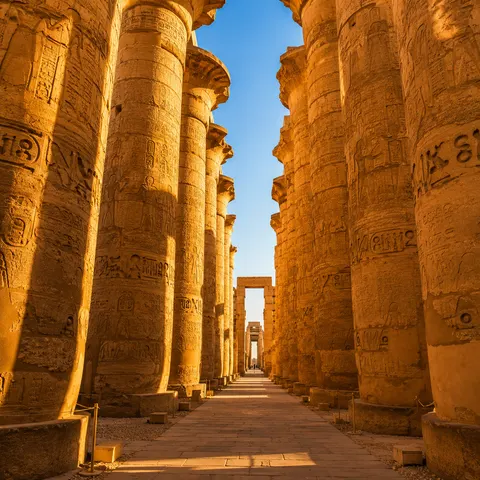
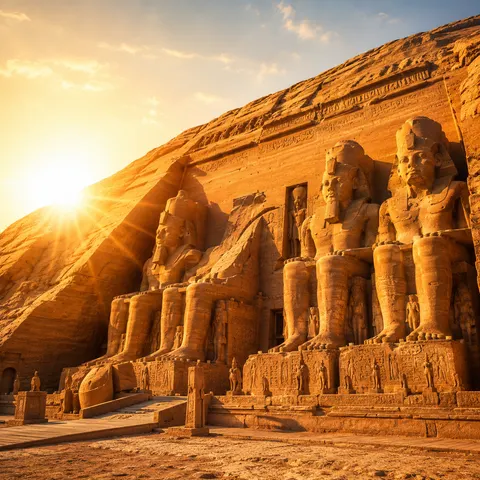
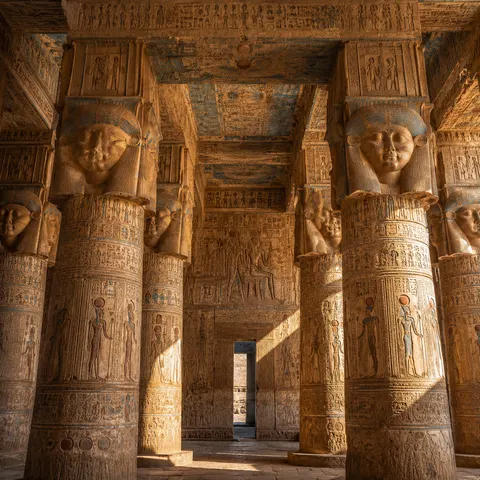
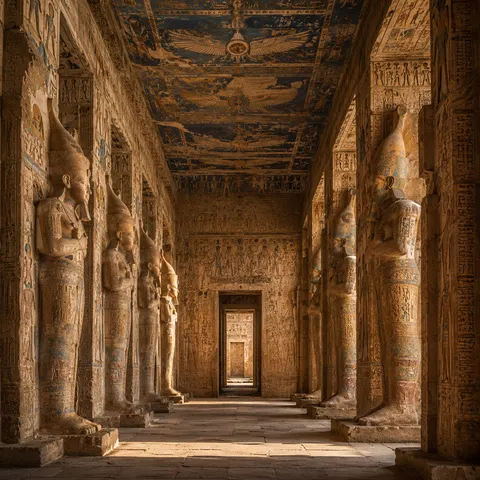
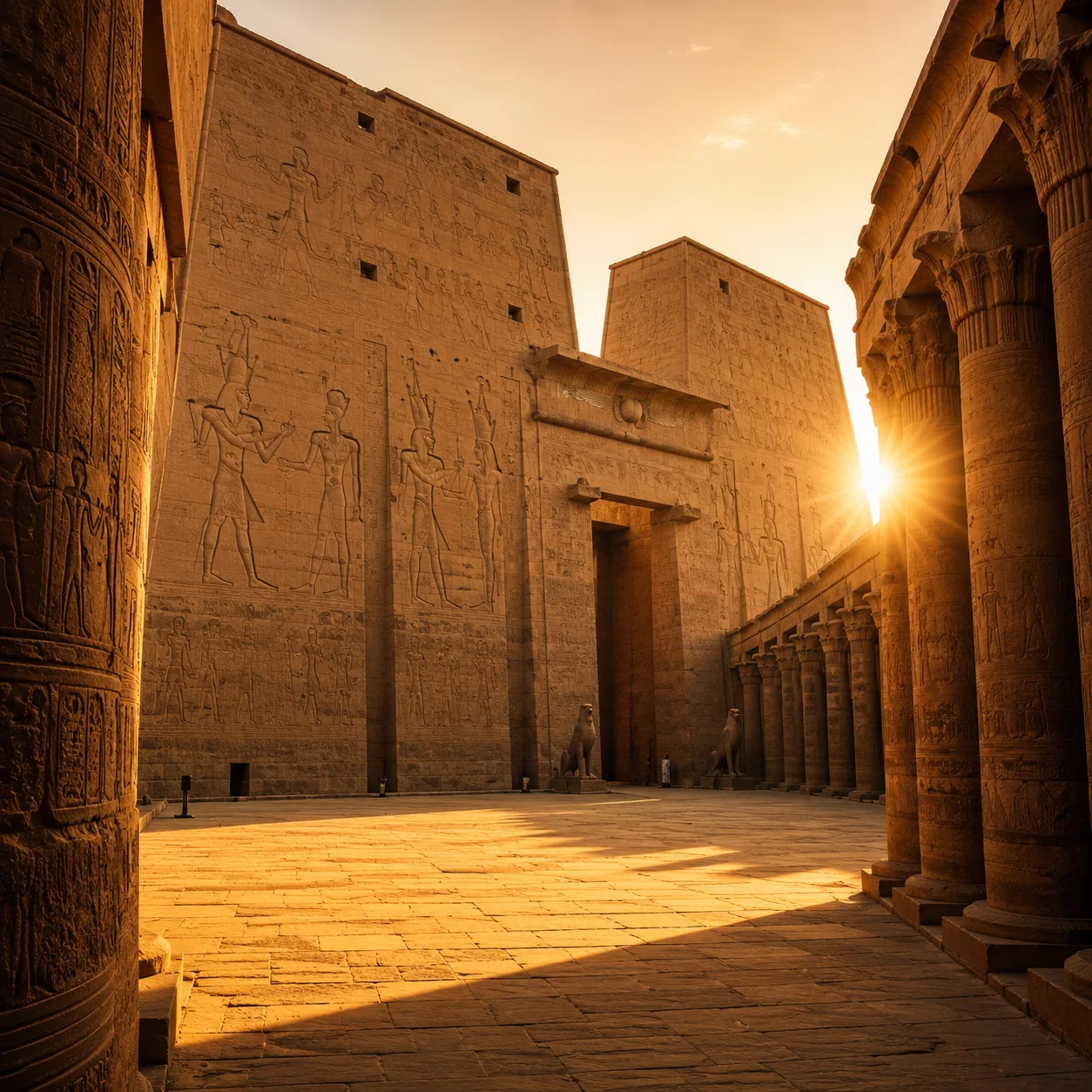
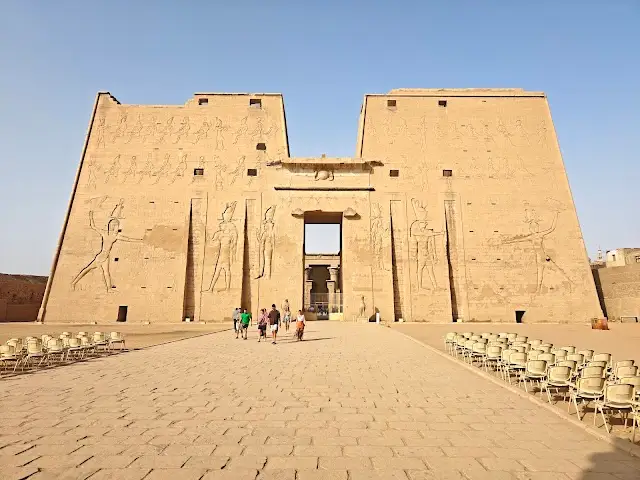
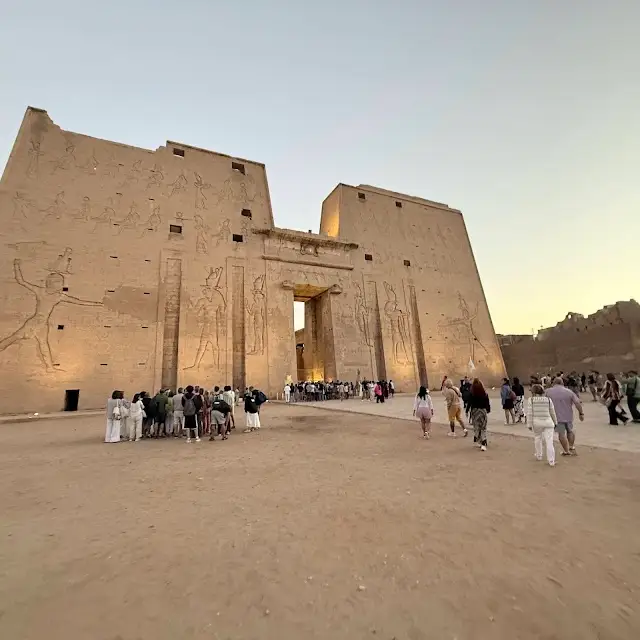
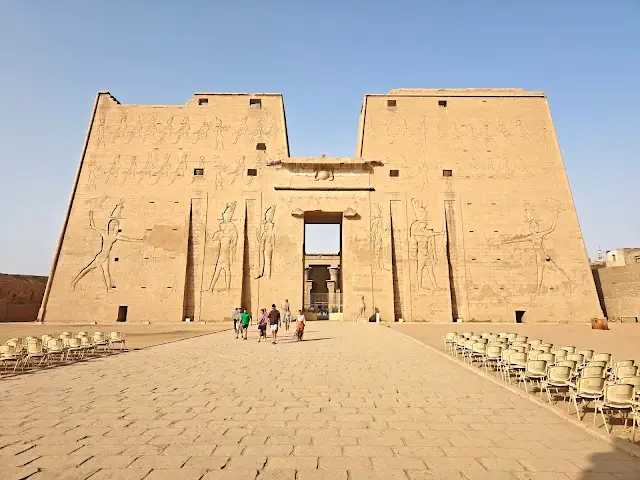
The Temple of Horus is the reason you have come, and almost nothing prepares you for how complete it is. Sand buried it for centuries, which is precisely why it stands today with its towering pylon façade nearly intact, its reliefs sharp, its roof still overhead. Step through the gateway and a great granite falcon — Horus himself, crowned and watchful — guards the court. Inside, the rooms grow darker and more secret until you reach the sanctuary and the small library once called the House of Books, its walls inscribed with the titles of papyri long since vanished into dust.
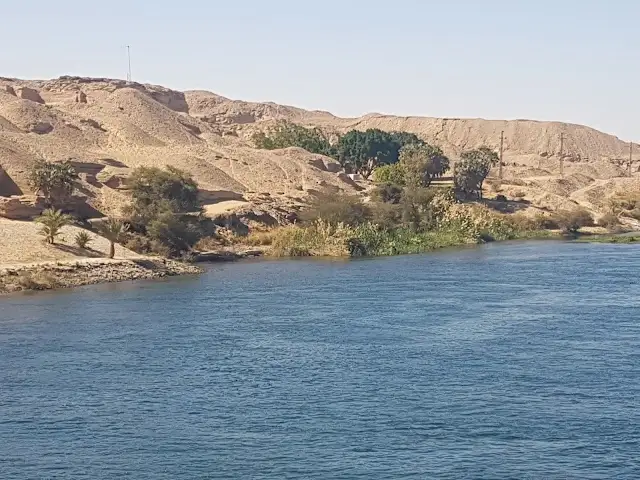
The pleasure of Edfu is the approach as much as the destination. The calèche ride from the dock is part of the ritual — a slow clip through ordinary streets, past bakeries and barbers, the driver pointing out nothing in particular. Afterwards there is time for the town souk, where the trade is for locals rather than visitors, and tea is poured strong and sweet. South of town lie the old sandstone quarries of Gebel el-Silsila, where the Nile narrows and ancient masons cut the stone that built half of Egypt's temples — a quieter, emptier counterpoint to Horus's grandeur.
Come between October and March, when the days are warm and dry and the early mornings carry a welcome edge of cool. This is peak cruising season for good reason: clear skies, comfortable temperatures for wandering an open temple court, and soft light on the sandstone. From April onwards the heat climbs fast, and by high summer Edfu bakes under a relentless sun that makes midday sightseeing genuinely unpleasant. If you do arrive in the hot months, follow the cruise rhythm and visit at first light, before the stone starts to throw the heat back at you.
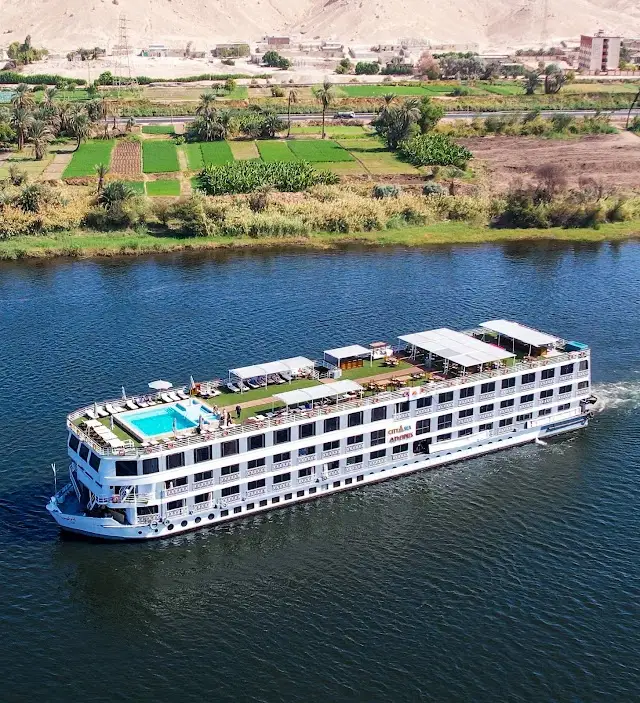
Edfu sits on the Nile between Luxor and Aswan, and most travellers arrive by river — the cruise boats moor along the corniche, and the temple is a standard stop on the southbound itinerary. From the mooring, the time-honoured way to the temple is by calèche, the horse-drawn carriages that line up at the dock; agree the fare before you climb in. It is also reachable by road as a day trip from either Luxor or Aswan, roughly midway between the two. The temple itself is a short, flat walk once you arrive.
The best time to visit Edfu is October–March, when the weather is at its kindest for sightseeing.
Plan around 1 day in Edfu to enjoy the highlights without rushing — add more if you like a slower pace or day trips.
In Edfu, don't miss Temple of Horus and Temple Pylon facade.
Ratings & photos from Google