

Attractions
© Ijanderson977Temple of Hathor
4.9·$8·2h
35 destinations
Nile Valley
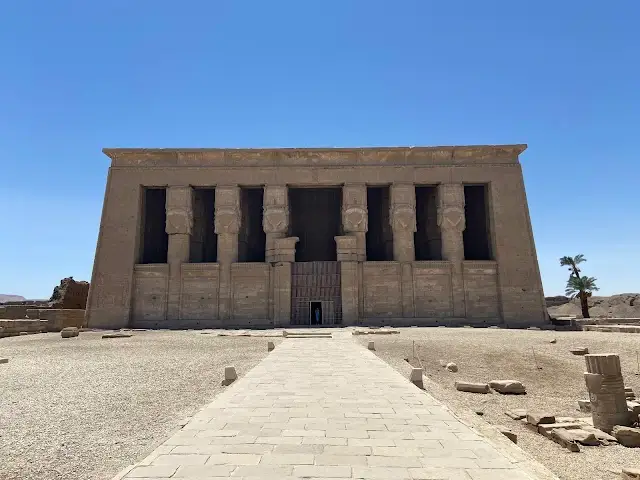
A sprawling temple complex sacred to Hathor, goddess of love and joy, where painted ceilings have been cleaned back to dazzling colour and a famous zodiac maps the ancient sky.

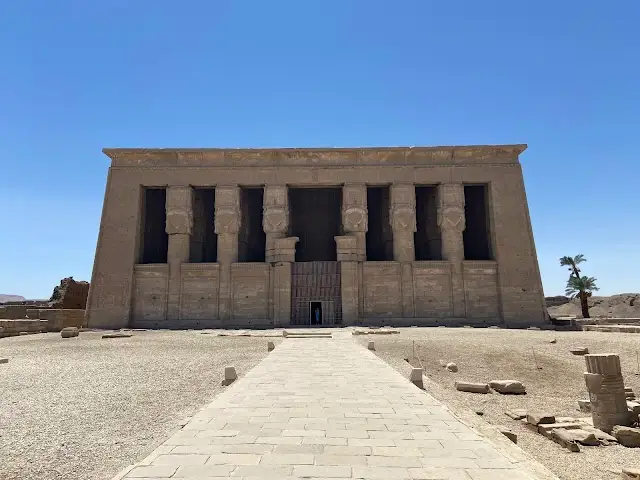
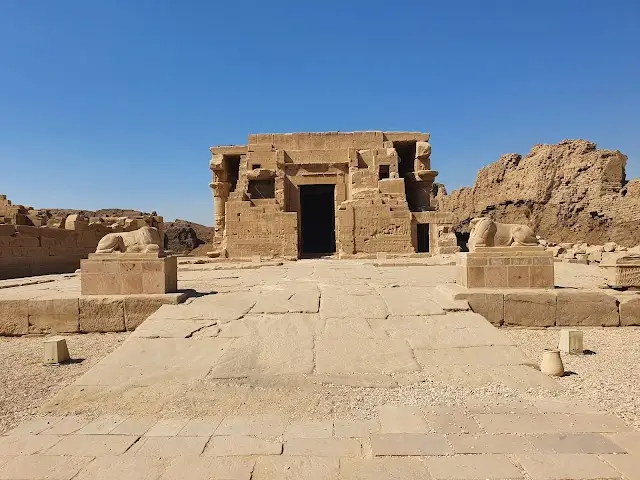

Dendera through the eyes of travelers who've been there.
Sign in to share your own photos of Dendera.
Sign inExplore by category
Curated by the egyptway editorial teamUpdated June 2026
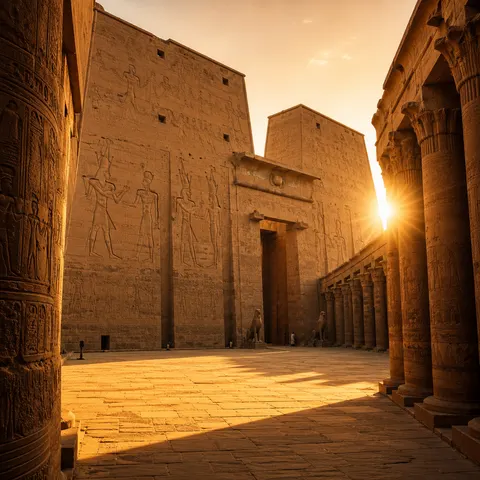
Dendera is one of those places that makes you grateful for everything that did not happen to it. Tucked in a bend of the Nile near Qena, north of Luxor, the great temple of Hathor survived the centuries remarkably whole, and a patient modern cleaning has done the rest — lifting away the soot of ages to reveal colour no one had seen for two thousand years. Hathor was the goddess of love, music, joy and motherhood, and her sanctuary has a warmth to match. Where many temples impress by their austerity, Dendera dazzles; it is a place that rewards looking up.
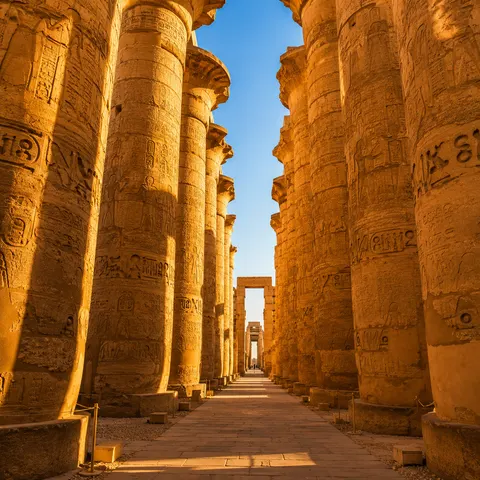
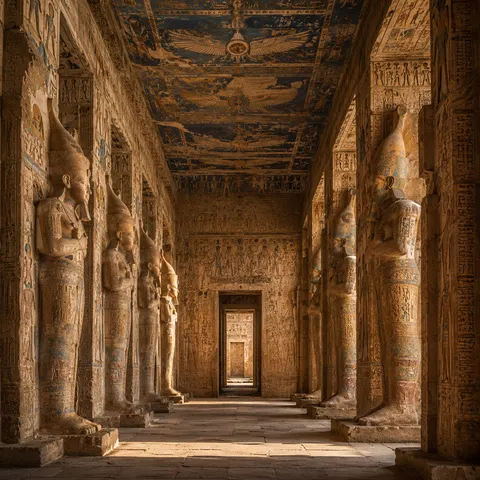
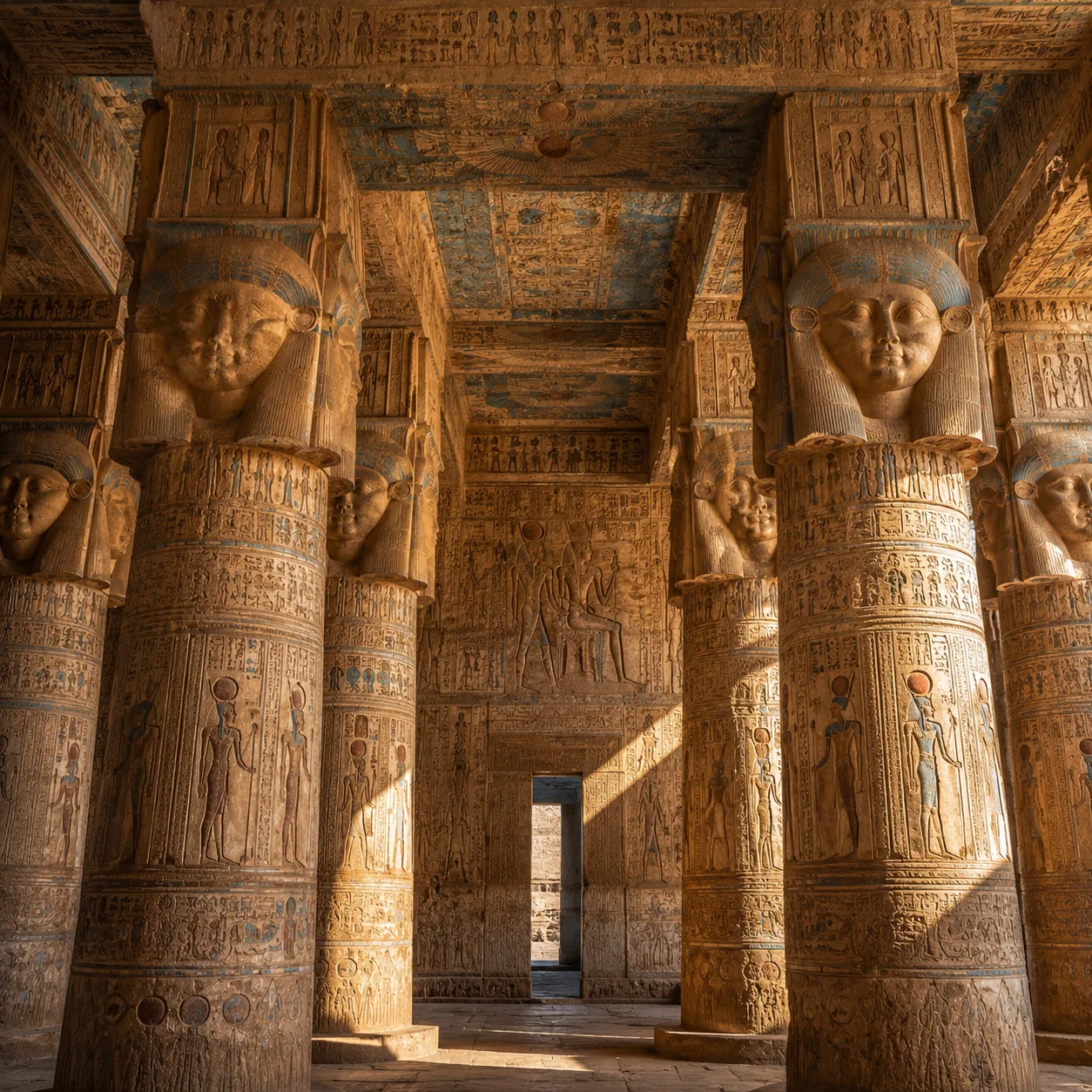
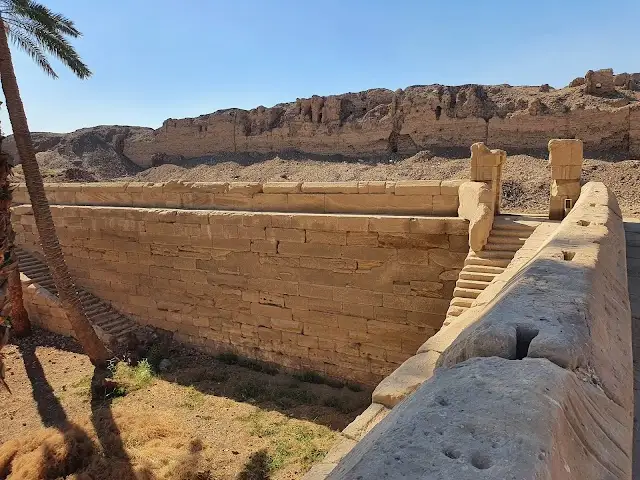
Inside the great hypostyle hall, massive columns rise to capitals carved with the calm, cow-eared face of Hathor on every side, and overhead the ceiling unfurls in restored bands of deep blue and gold — vultures, zodiac figures, the goddess Nut swallowing and birthing the sun. On one ceiling is the celebrated Dendera Zodiac, a circular map of the ancient sky; the original was prised out and carried to the Louvre, and a faithful cast now fills its place. Descend into the narrow crypts, climb to the rooftop chapels where the New Year rites were held, and find the Roman birth house and the still, green sacred lake outside.
Because Dendera lies a little off the usual Luxor circuit, it never feels as crowded as the west-bank tombs, and there is room to wander. Most people come as a half-day trip from Luxor and have the rooftop chapels almost to themselves, watching the fields and palms beyond the enclosure wall. It is a temple to take slowly: the joy of it is in the detail — a preserved face, a sudden flash of original paint, the way the morning light slants through the hall and the painted ceiling seems, for a moment, to come back to life.
October to April is the time to come, when warm, dry days make the journey from Luxor easy and the temple's painted interiors are cool and inviting. This is Upper Egypt, and from June to September the heat is severe — comfortably above 40°C by midday — though Dendera's thick walls and shaded halls offer more refuge than most open sites. Even so, an early start pays off: arrive when the temple opens and you will have the rooftop chapels and the play of morning light on the ceilings largely to yourself.
Dendera sits near Qena, north of Luxor, and is almost always visited as a day trip from the city — by hired car with driver, by organised tour, or sometimes by river boat up the Nile. The drive takes a little over an hour each way through farmland and canal-side villages. Many travellers pair it with Abydos further north for one long, rewarding day of temples. Once inside the enclosure, everything — hall, crypts, rooftop, mammisi and sacred lake — is within a short, level walk.
The best time to visit Dendera is October–April, when the weather is at its kindest for sightseeing.
Plan around 1 day in Dendera to enjoy the highlights without rushing — add more if you like a slower pace or day trips.
In Dendera, don't miss Temple of Hathor, The Dendera Zodiac, and The Crypts.
Ratings & photos from Google